Inverting the Unwanted
M.Arch Thesis · Winter 2024 and ongoing
Re-purposing small-diameter trees as building components for carbon sequestration.
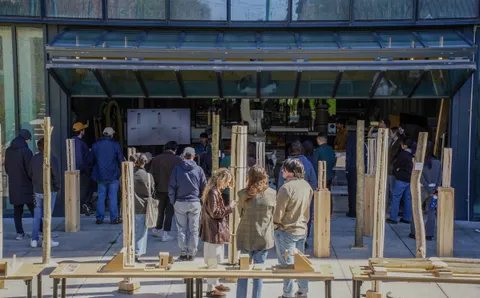
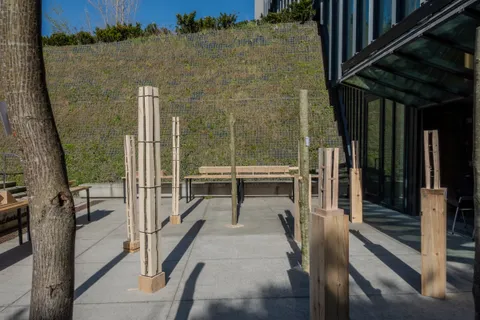
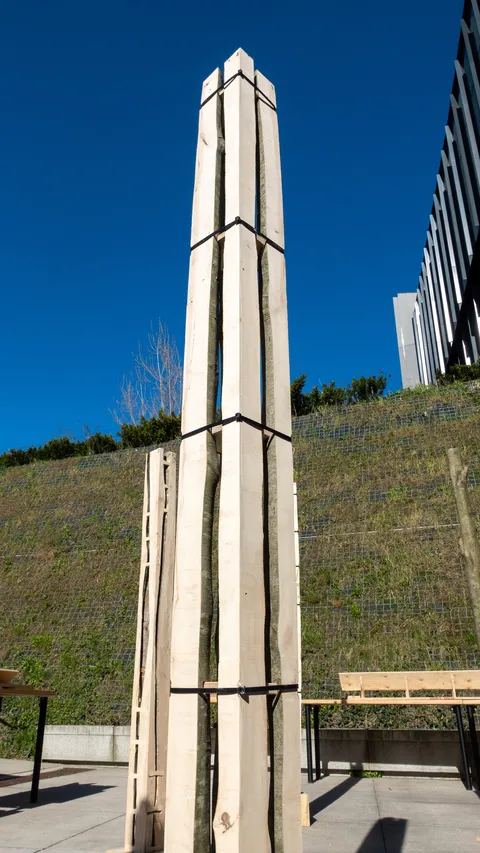
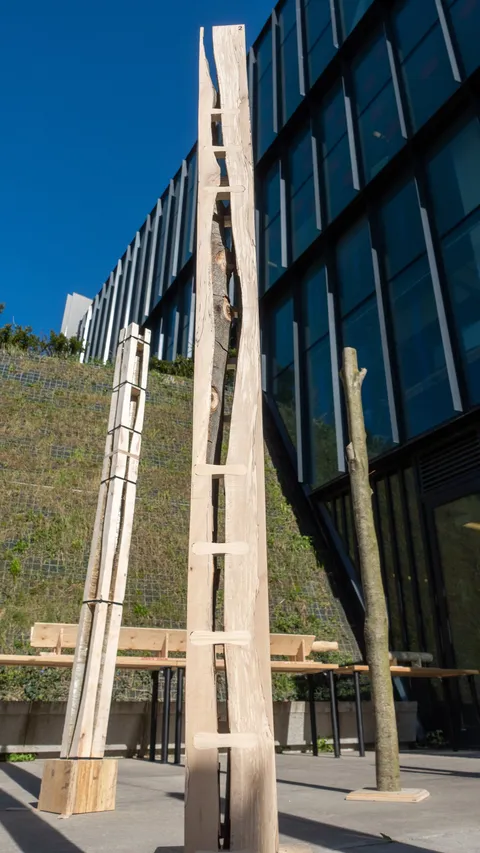
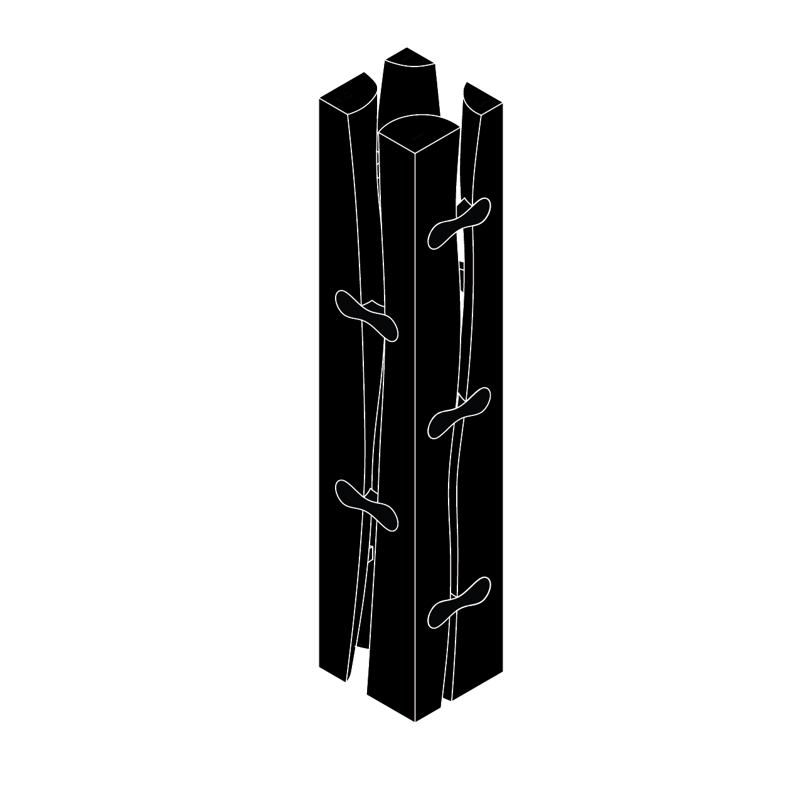
Inverting the Unwanted introduces an innovative timber structure design that involves cutting a log into quarters and rearranging it to create a square exterior. This method standardizes the geometry and dimensions of small-diameter trees, which are an underutilized waste-material stream, transforming them into posts and beams.
As small-diameter trees are often felled en masse as part of a forestry practice called “thinning”, repurposing these materials has the potential to sequester the carbon otherwise released through decomposition.
- Instructor: Zachary Mollica
- Ongoing with the University of Nebraska Lincoln as a design build, for completion Spring 2026
Architecture, Research, Fabrication
Overview
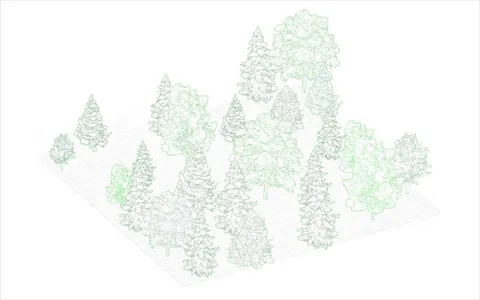
Small diameter trees
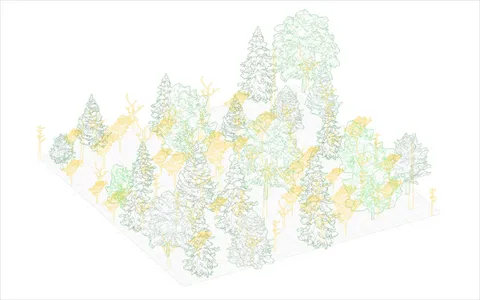
An underutilized resource stream. Thinning is a process where foresters cut down small diameter trees to funnel nutrients to larger ones. The typical use is pulpwood for paper manufacturing. These cut trees are not worth much, and after transportation and labour costs foresters barely break even. Most of the time they are left to decompose, and all the carbon they sequestered goes back into the atmosphere. Thinning has a host of benefits: it reduces ladder fuels (small trees and understory that let forest fires "climb" and light large trees), increases available nutrients for mature trees, and prevents "natural thinning", when trees weaken from a lack of nutrients and start to die, often spreading pests and disease.
The puzzle log technique
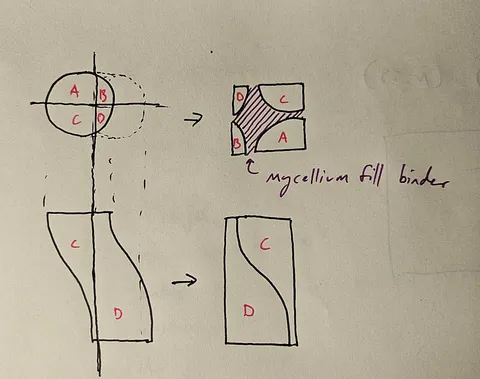
The premise: cut a log into quarters, rearrange the quarters so the square corners face outwards, then bind and join the quadrants. It uses a cheap waste stream with maximal efficiency, creates a square member for ease of construction, and leverages natural geometry and edge alignment for structural and aesthetic benefit.
Prototyping
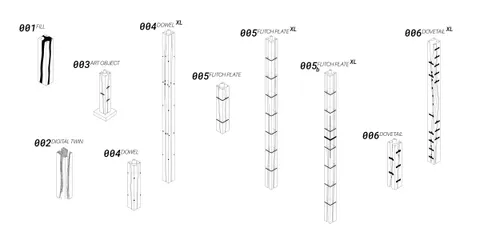
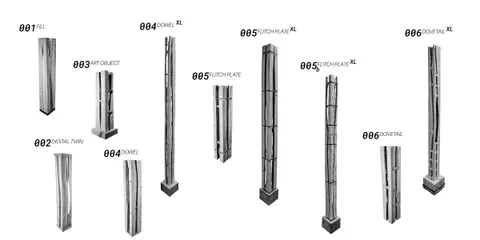
A total of 10 prototypes were designed and fabricated, each testing different joinery techniques, manufacturing processes and computational tools.
Custom tooling
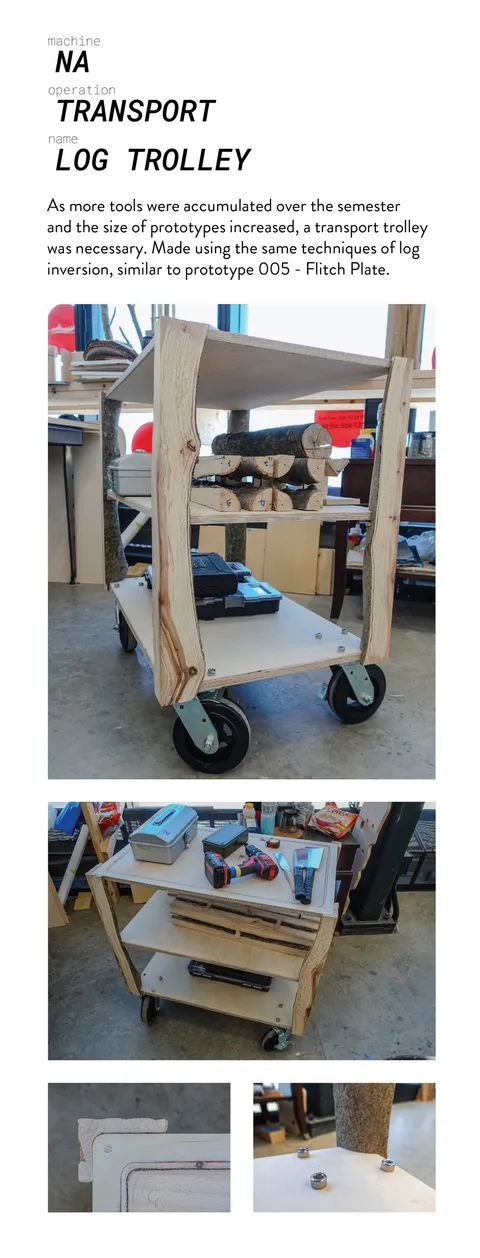
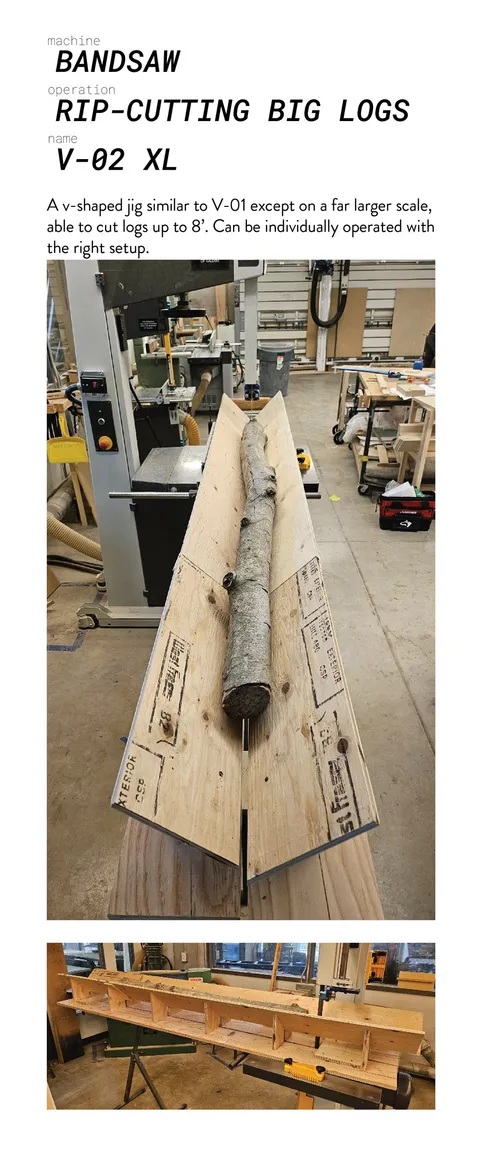
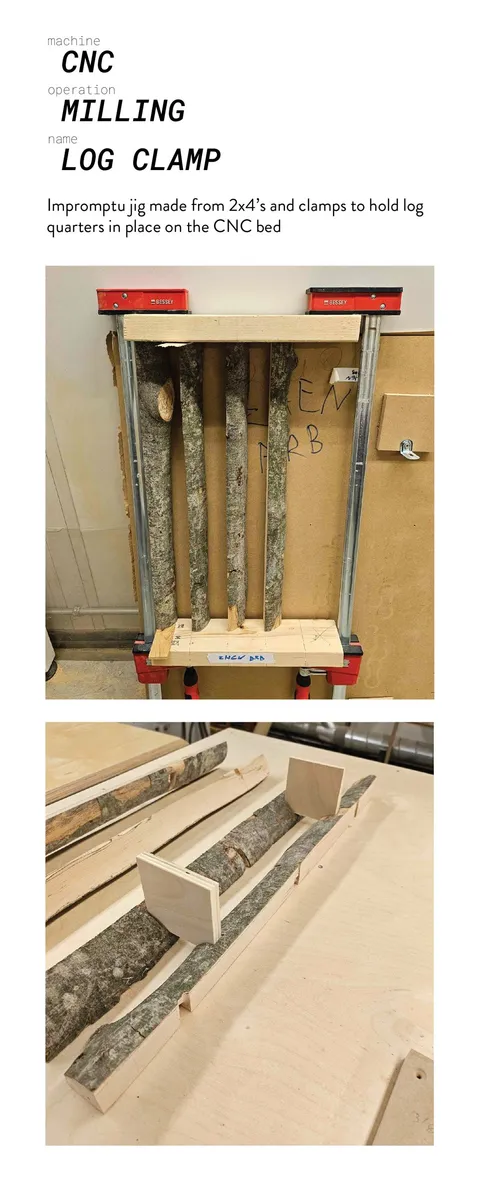
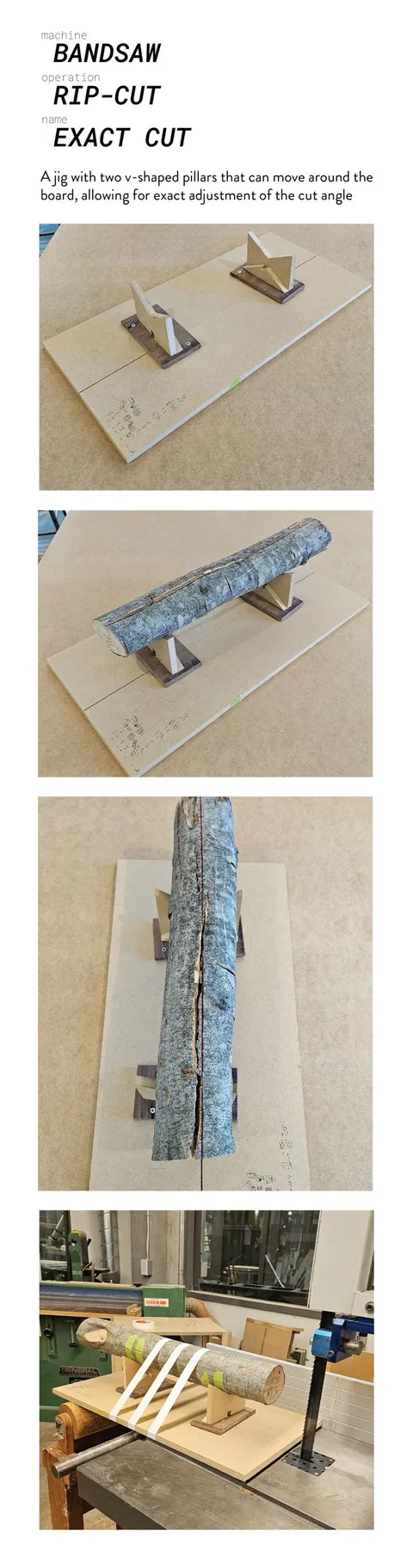
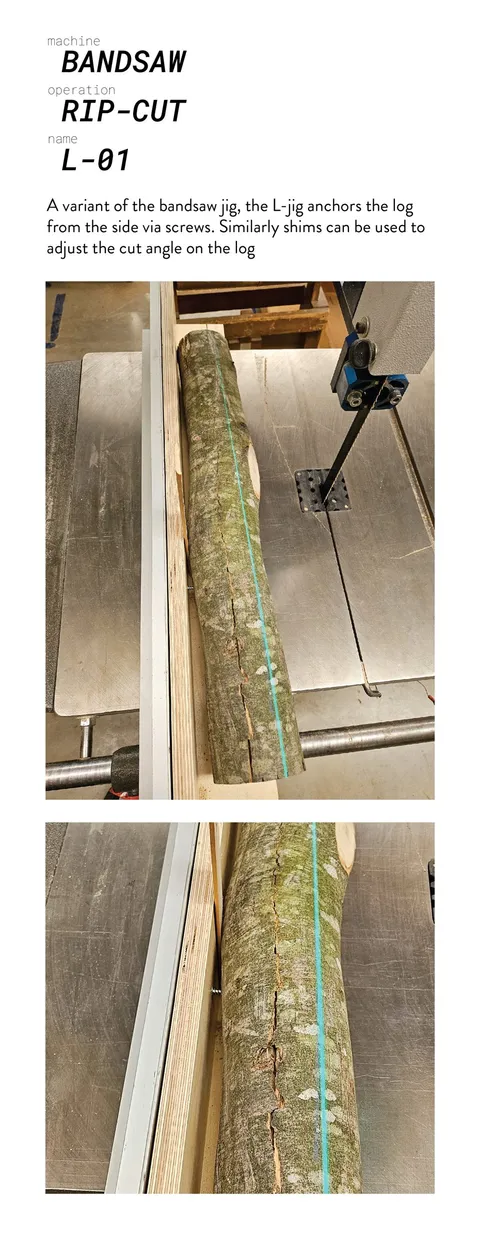
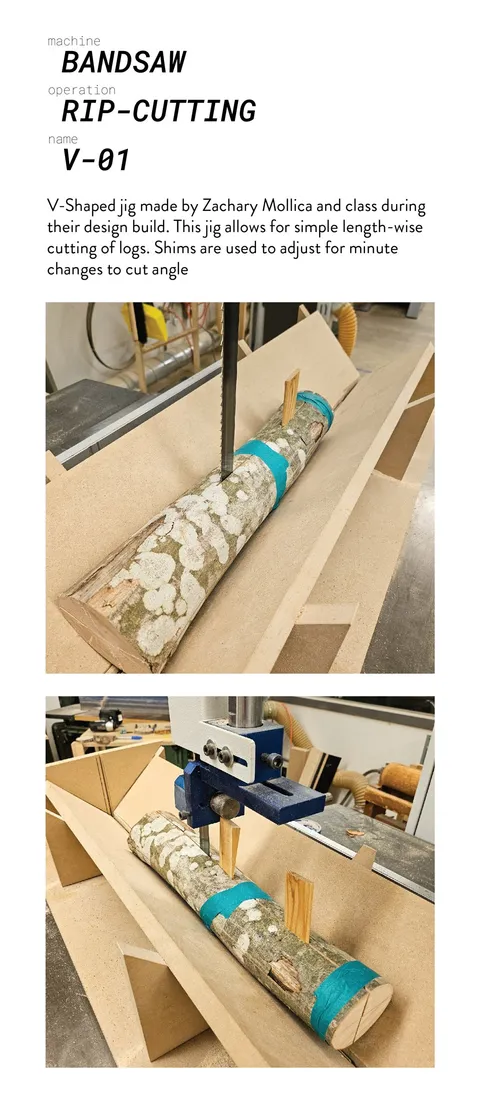
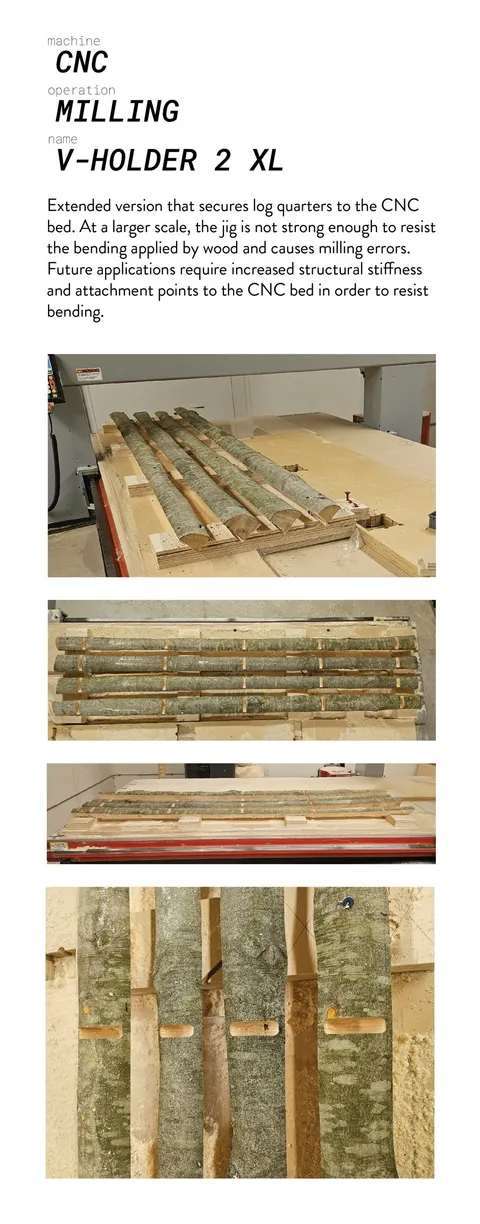
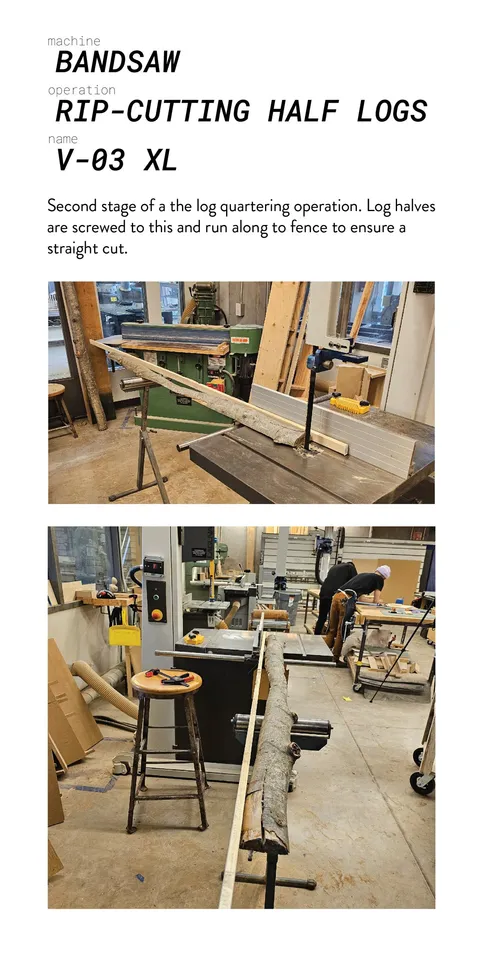
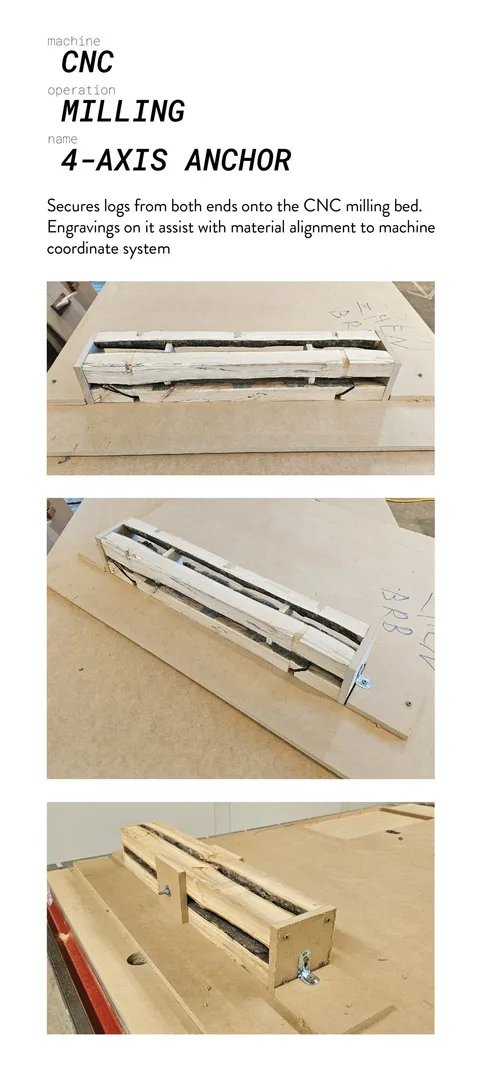
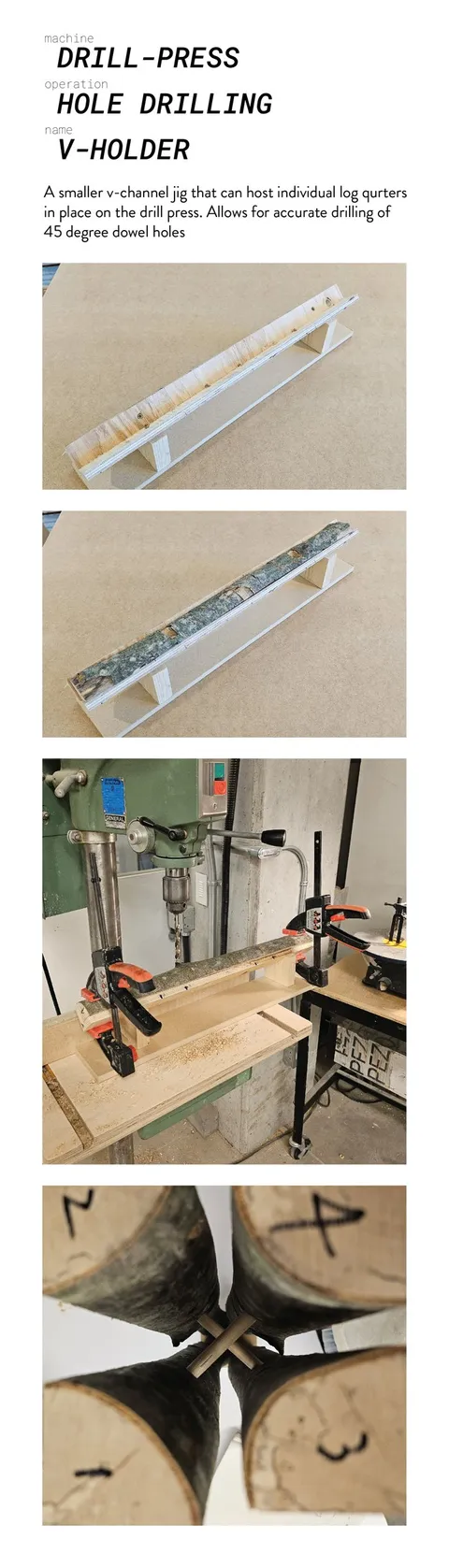
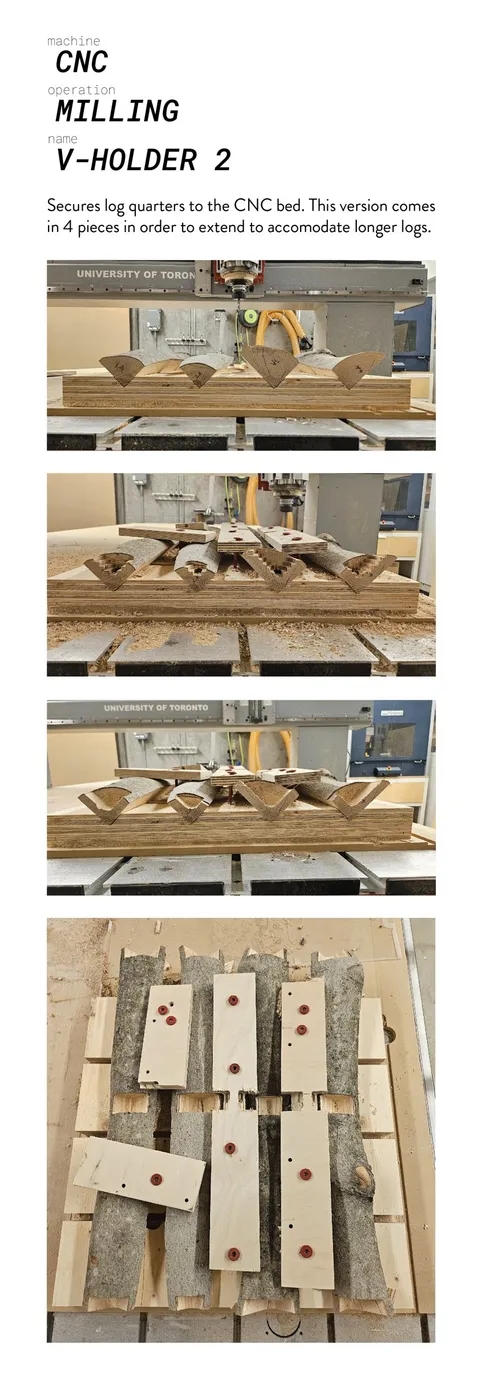
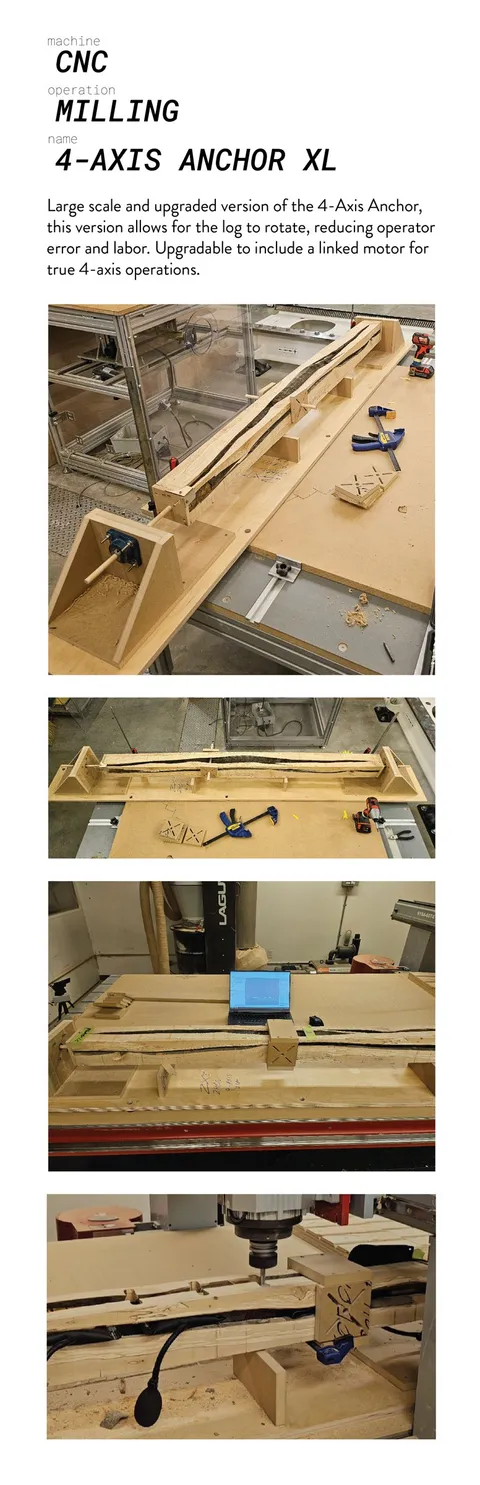
Custom jigs and tooling were needed to fabricate and accommodate the uneven geometry of round logs. 15 jigs were built and used over the course of the project.
Build process
From a small tree cut down in thinning, to the sawmill, a 3D scan, cut angles solved with a genetic solver, and one of three joinery systems: dovetail, dowel, or flitch plate columns.
Computational processes
Computational tools are a means to scale the work while keeping fabrication efficient: genetic optimization (Galapagos), photogrammetry, pseudo-random recursion, and a log of best fit. Genetic optimization speeds up the search for cut planes that define a structurally stable column. The script takes a scanned log and minimizes the volume difference between the cut quadrants, balancing wood mass so the load is shared equally. Fitness: minimize the difference in volume between quadrants. Genome: cutting plane angle and position. Log Generator is a Grasshopper script that generates pseudo-randomized logs, then auto-cuts, positions and inverts the quarters. The randomized dataset of test logs was key to developing connection details and structural drawings.
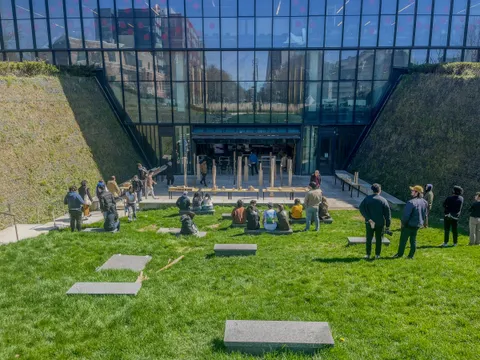
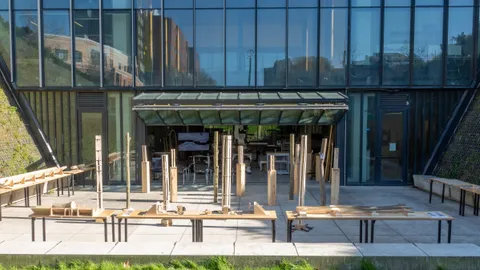
Thesis exhibition